How AI Will Shape the Future of Digital Marketing
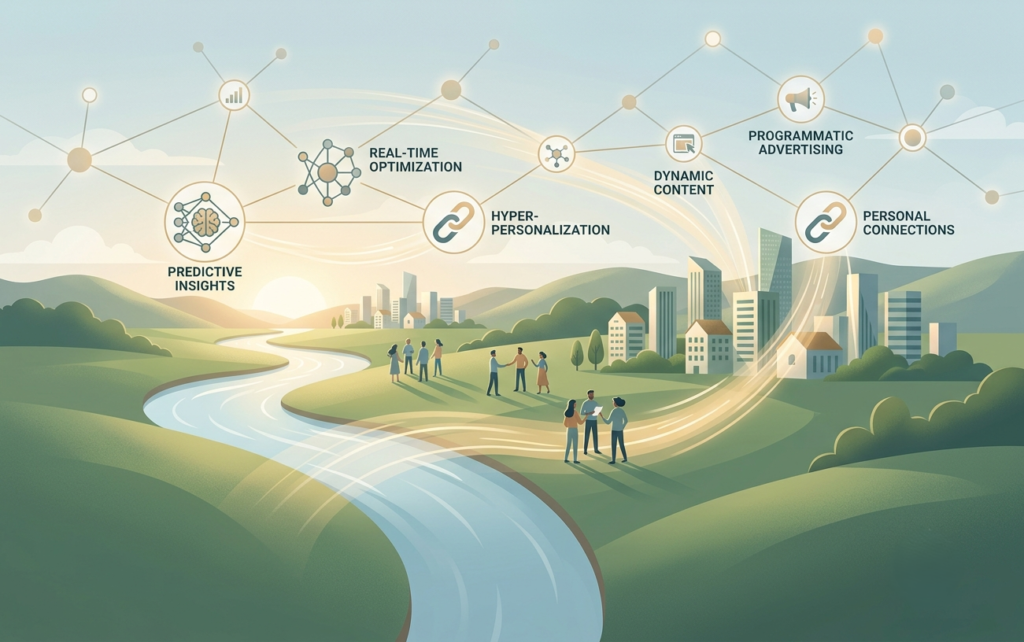
The digital marketing landscape is undergoing a massive transformation. What used to be defined by manual campaign setups, static target audiences, and reactive analytics has shifted toward real-time optimization, hyper-personalization, and predictive insights. At the center of this evolution is Artificial Intelligence (AI).
AI is no longer just a trend or an optional tool for tech-forward companies—it has become the backbone of modern marketing strategies. From generating content to optimizing ad spend, AI is reshaping how brands connect with consumers.
Below is an in-depth breakdown of how AI is shaping the future of digital marketing and what marketers need to know to stay competitive.
1. Hyper-Personalization at Scale
Traditionally, personalization meant adding a customer’s first name to an email subject line. Today, AI enables hyper-personalization—delivering tailored experiences based on user behavior, browsing history, purchase patterns, and real-time context.
- Behavioral Analysis: AI algorithms analyze vast datasets in milliseconds to understand individual preferences and predict intent.
- Dynamic Content Delivery: Websites and email campaigns can automatically adjust images, product recommendations, and messaging depending on who is viewing them.
- Customer Retention: By delivering relevant content at the right moment, brands significantly boost engagement, loyalty, and conversion rates.
2. Predictive Analytics and Data-Driven Decisions
Instead of relying on historical performance to guess future trends, marketers now use AI-powered predictive analytics to forecast consumer behavior.
- Customer Lifetime Value (CLV) Prediction: AI models identify which customers are likely to yield the highest long-term value, allowing marketers to allocate budget more efficiently.
- Churn Prevention: Predictive systems flag signs of customer disengagement early, enabling automated retention campaigns before the user leaves.
- Demand Forecasting: AI analyzes market conditions and historical sales to help brands prepare inventory and time their marketing pushes accurately.
3. Revolutionizing Content Creation and Curation
Generative AI tools (such as ChatGPT, Claude, and Midjourney) have transformed content workflows across industries. While AI does not replace human creativity, it accelerates execution.
- Copywriting & Ideation: Marketers use AI to draft ad copy, generate blog outlines, brainstorm social media captions, and write email templates in seconds.
- Visual & Video Production: AI tools generate high-quality images, video snippets, and graphic variations without needing extensive design resources.
- Localization & Scaling: Content can be instantly translated and adapted to match regional tone, culture, and language constraints.
4. Smart Advertising and Automated Bidding
Paid media management has become increasingly complex, but AI streamlines media buying through programmatic advertising.
- Real-Time Bidding (RTB): AI algorithms evaluate ad placements instantly, placing bids based on the likelihood of user conversion.
- Automated Creative Testing: Machine learning platforms test hundreds of headline and image combinations simultaneously, shifting budget toward top-performing variations automatically.
- Ad Fraud Detection: AI identifies non-human traffic, bot clicks, and suspicious activity in real time, saving ad budgets from waste.
5. Next-Generation Conversational AI & Chatbots
Customer support and lead generation are merging through advanced conversational AI interfaces.
- 24/7 Intelligent Support: Modern AI chatbots understand context, intent, and sentiment—moving far beyond basic decision-tree scripts.
- Lead Qualification: AI agents interact with prospective customers, answer specific product queries, and schedule meetings directly into sales calendars.
- Voice Search Optimization: As voice-assisted devices grow, AI helps marketers optimize content for conversational, long-tail search queries.
6. AI in Search Engine Optimization (SEO)
Search engines themselves are evolving into AI-first answer engines. To rank effectively, marketers must adapt their SEO strategies accordingly.
- Search Intent Analysis: AI tools analyze search engine results pages (SERPs) to reveal what users are actually looking for, guiding search-focused content creation.
- Generative Search Experiences: Search engines now deliver synthesized answers directly on results pages. Marketers must optimize for authority, relevance, and semantic depth to maintain visibility.
- Automated Technical Audits: AI tools continuously monitor websites for broken links, slow loading times, and indexing issues, reducing manual maintenance effort.
Key Challenges to Keep in Mind
While AI provides incredible leverage, marketers must navigate several crucial considerations:
- Data Privacy & Ethics: Stricter privacy regulations require transparent data handling when training or deploying AI systems.
- Maintaining Brand Voice: Over-reliance on unedited AI output can lead to generic, repetitive content that lacks emotional resonance.
- Skill Adaptation: The role of the marketer is shifting from manual execution to strategy, prompt engineering, and critical curation.
Final Thoughts
AI is not replacing marketers; rather, marketers using AI are replacing those who do not. By embracing predictive insights, automated workflows, and hyper-personalized customer journeys, brands can scale their efforts efficiently while delivering meaningful value to their audience. The future of digital marketing belongs to those who successfully combine human strategy with artificial intelligence.